
KUJANG
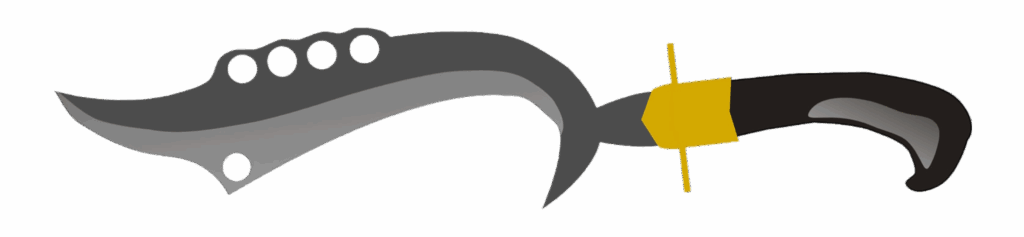
The Kujang is a bladed weapon native to the Sundanese people of Indonesia. The earliest Kujang made is from around the 8th or 9th century. It is forged out of iron, steel, and pattern welding steel with a length of approximately 20–25 cm and weighs about 300 grams. According to Sanghyang siksakanda ng karesian canto XVII, the kujang was the weapon of farmers and has its roots in agricultural use. It is thought to have originated from its predecessor, a Kudi. The Kujang is one of the traditional weapons in the Sundanese school of Pencak Silat. The kujang, like the keris, is a blade of sentimental and spiritual value to the people of Indonesia.
Characteristics of a Kujang include a cutting edge and other parts such as papatuk / congo the tip of the blade, eluk / silih the bulging curve at the base of the blade, tadah the inward curve at the belly of the blade, and mata small holes on the blade that are covered with gold or silver. Apart from its unique characteristics that tend to be thin, the material is dry, porous and contains many natural metal elements.
In Bogor poem as it is spoken by Anis Djatisunda (1996–2000), the kujang has many functions and shapes. Based on functions there are four of them namely, kujang pusaka (symbol of grandeur and safety protection), kujang pakarang (warfare), kujang pangarak(ceremonial), and kujang pamangkas (agricultural tool). As for the shapes, there is the kujang jago (shape of a rooster), kujang ciung (shape of a Javan cochoa bird), kujang kuntul (shape of an egret bird), kujang badak (shape of a rhinoceros), kujang naga (shape of a mythical dragon), and kujang bangkong (shape of a frog). Apart from that, there are shapes of the kujang blade that resemble female characters of wayang kulit as a symbol of fertility.
PARANG
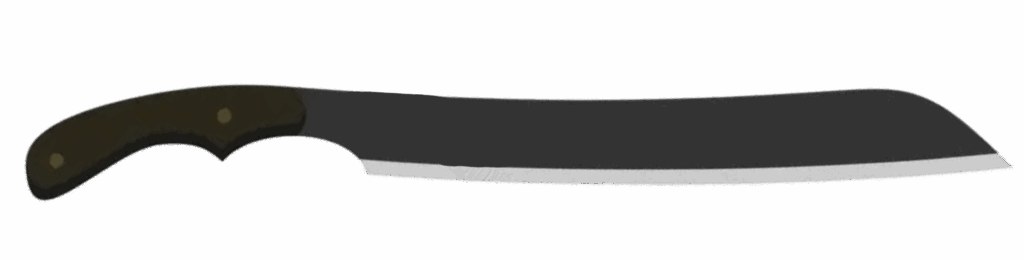
Typical vegetation in Southeast Asia is more dense than in South America, and the Parang is therefore optimized for a stronger chopping action with a heavier blade and a “sweet spot” further forward of the handle, in comparison to a South American machete; the blade is also beveled more obtusely to prevent it from binding in the cut. This is the same rationale and (in practical terms) the same design as the Indonesian Golok and very similar to the Filipino bolo. The parang blade ranges from 25 to 91 centimeters (10 to 36 in) in length.
The parang has a weight of up to 0.91 kilograms (2 lb) and the edge typically uses a convex grind. The parang has three different edges: the front is very sharp and used for skinning, the middle is wider and used for chopping, and the back end (near the handle) is very fine and used for carving. A parang handle is normally made out of wood or horn, with a wide end to prevent slips in wet conditions. The tang of the parang is usually of hidden tang design, but full tang designs are also available.
Like the machete, the parang is frequently used in the jungle as well as being a tool for making housing, furniture, and tools. The parang has been noted in John “Lofty” Wiseman’s SAS Survival Handbook for this use. Wiseman points out that by grinding three different angles in three separate regions along the Parang blade—a narrow angle at the tip for skinning and fine cutting work; a wide, chopping blade angle along the bow in the blade for axe work, and an all-purpose hunting/survival knife angle along the edge nearest the handle for general purpose work—the parang becomes a very useful, and compact all-purpose tool in the bush.
GOLOK
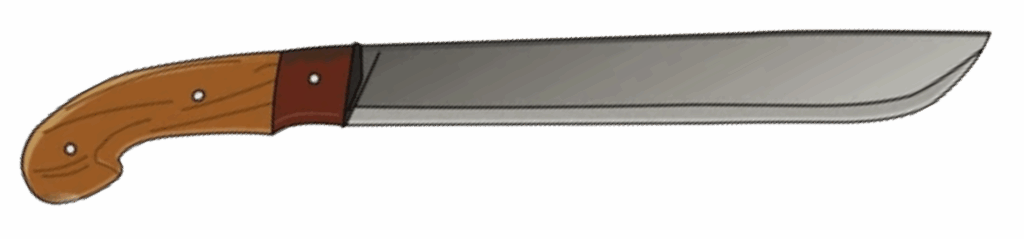
A Golok is a cutting tool, similar to a machete, that comes in many variations and is found throughout the Indonesian and Malay Archipelago. It is used as an agricultural tool as well as a weapon. The word golok is used in Indonesia and Malaysia. Both in Malaysia and in Indonesia, the term is usually interchangeable with the longer and broader parang. In the Sundanese region of West Java it is known as bedog. In the Philippines, the term gulok (also known as gunong), refers to different dagger weapons including the kris.
In Indonesia, the golok is often associated with the Sundanese and Betawi people. The Betawi recognize two types of golok; gablongan or bendo is the domestic tool used in the kitchen or field for agricultural purposes, and the golok simpenan or sorenam that is used for self-protection and traditionally always carried by Betawi men. The golok is a symbol of masculinity and bravery in Betawi culture. A jawara (warrior) will always have a golok hung or tied around the waist at the hips. This custom, however, has ceased to exist since the 1970s, when authorities would apprehend those that carry the golok publicly and have it confiscated in order to uphold security, law and order, and to reduce gang fighting.
Sundanese, Javanese and Malay goloks have also been recorded. The use of golok in Sundanese was recorded in Sanghyang Siksa Kandang Karesian (text dated 1518) and in Malay was recorded as early as the Hikayat Hang Tuah (text dated 1700) and Sejarah Melayu (1612).
KARAMBIT
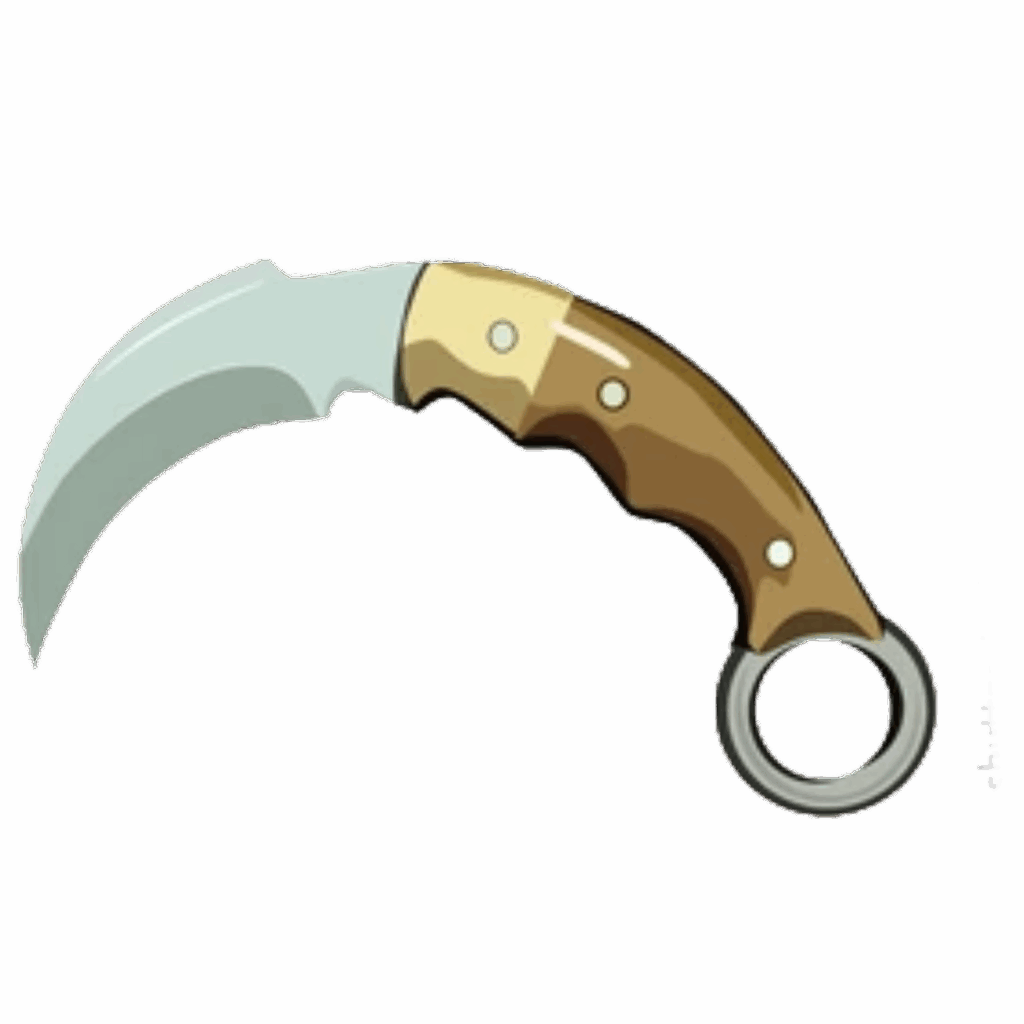
The Karambit is believed to have originally been weaponized among the Minangkabau people of West Sumatra where, according to folklore, it was inspired by the claws of a tiger.
As it was weaponized, the blade became more curved to maximize cutting potential.
Through Indonesia’s trade network and close contact with neighboring countries, the weaponization of the karambit was eventually dispersed through what are now Malaysia, the Philippines, Thailand, Cambodia, Laos, and Myanmar.
KERIS
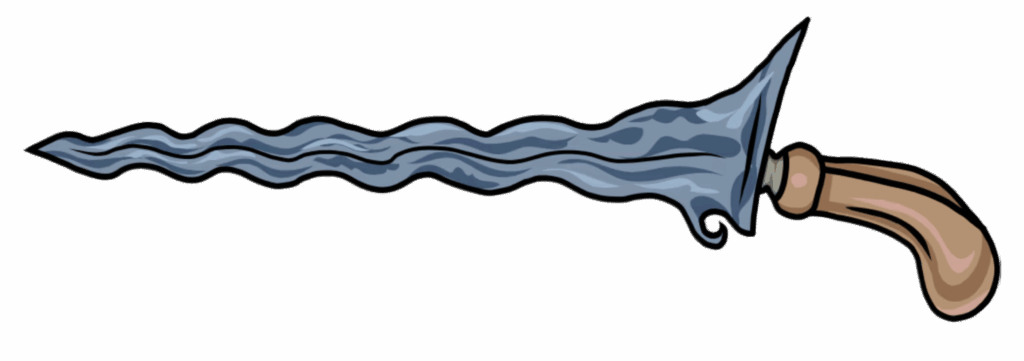
The Keris is a Javanese asymmetrical dagger with a distinctive blade-patterning achieved through alternating laminations of iron and nickel iron (pamor). The Kris is famous for its distinctive wavy blade, although many have straight blades as well, and is one of the weapons commonly used in the Pencak Silat martial art native to Indonesia. Kris have been produced in many regions of Indonesia for centuries, but nowhere—although the island of Bali comes close—is the Kris so embedded in a mutually-connected whole of ritual prescriptions and acts, ceremonies, storied backgrounds, and epic poetry as in Central Java. Within Indonesia the Kris is commonly associated with Javanese culture, although other ethnicities in it and surrounding regions are familiar with the weapon as part of their cultures, such as the Balinese, Sundanese, Malay, Madurese, Banjar, Buginese, and Makassar people. The Kris itself is considered as a cultural symbol of Indonesia.
A Kris can be divided into three parts: blade (bilah or wilah), hilt (hulu), and sheath (warangka). Each part of the kris is considered a piece of art, often carved in meticulous detail and made from various materials: metal, precious or rare types of wood, or gold or ivory. A Kris’s aesthetic value covers the dapur (the form and design of the blade, with around 60 variants), the pamor (the pattern of metal alloy decoration on the blade, with around 250 variants), and tangguh referring to the age and origin of a Kris.Both a weapon and spiritual object, Kris are often considered to have an essence or presence, considered to possess magical powers, with some blades possessing good luck and others possessing bad.
Kris are used for display, as talismans with magical powers, weapons, a sanctified heirloom (pusaka), auxiliary equipment for court soldiers, an accessory for ceremonial dress, an indicator of social status, a symbol of heroism, etc. Legendary kris that possess supernatural power and extraordinary ability were mentioned in traditional folktales, such as those of Empu Gandring, Taming Sari, and Setan Kober.
PISAU
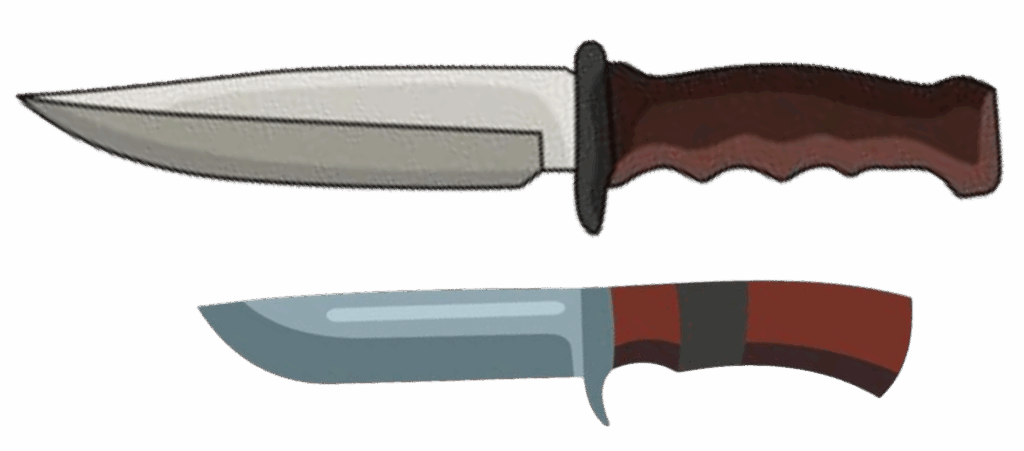
Pisau (pronounced pee-sau) is the Indonesian word for knife, a versatile term covering various cutting implements from small pocket knives to larger blades, central to daily life, traditional crafts like rattan work (pisau raut) for Dayak people, and even martial arts (Silat) in the Indonesian and Malay Archipelago. Indonesian knives vary greatly in style, often featuring unique handles, materials (wood, horn), and decorative elements reflecting regional culture, like the Betawi pisau raut for woodworking or larger ceremonial blades.
TONGKAT
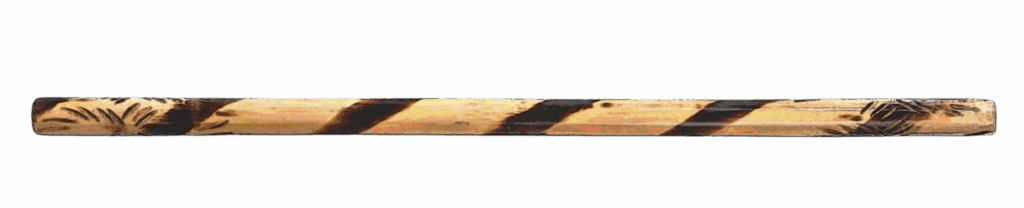
The Indonesian fighting stick, often called Tongkat or used in systems like Pencak Silat, are typically made from durable rattan or hardwood, used in martial arts and cultural rituals for training, self-defense, and ceremonial purposes, with famous styles like the Sasak tribe’s Peresean (rattan stick vs. buffalo hide shield) and rituals like Ojhung, where stick fighting asks for rain. These sticks are central to various regional combat arts, representing strength and tradition.Indonesian Rattan is used in CCS for it’s durability and longevity. The stick is a blunt force weapon but it is no less deadly. Used to strike, break, maim, lock and throw it can be devastating.
TOYA/ HALU

The Toya or Halu stick is a 40″ stick that was originally a tool used in agriculture in Java but was later employed as a weapon when need called. Used similar to how a short staff is wielded, the Halu gets us our longest reach of all of the CCS weapons, able to go from extremely close range to full long range.
CABANG
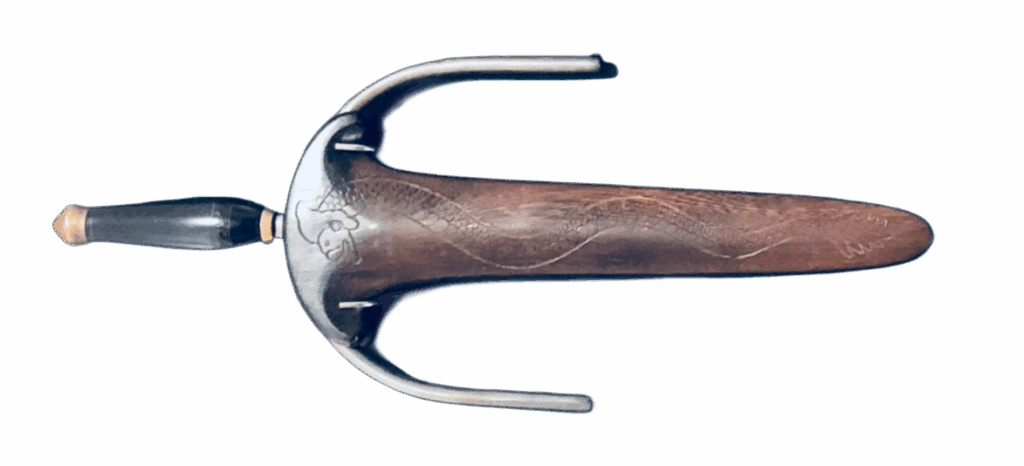
The Cabang is a 3-pointed weapon from Southeast Asia. Known as tekpi in Malay, it is called chabang or cabang in Indonesian, siang tépi in Hokkien, and trisul in Thai. It consists of a pointed metal main prong, two shorter metal side prongs, a one-handed hilt, and a blunt metal pommel, giving it the appearance of a small trident of sorts. More than a weapon, the tekpi was also an important Hindu-Buddhist symbol. It is similar to the Okinawan sai.
The Cabang consists of a pointed metal main prong, that projects from a one-handed grip, two shorter metal side prongs, which project from the opposite sides of the base of the main prong and point in the same direction as it, and a blunt metal pommel, that attaches to the bottom of the grip. The two side prongs are usually curved to further facilitate disarming opponents from their weapons. The length of the Cabang ranges from 12 in to 19 in (30 cm to 49 cm).
The Cabang is believed by some to have been derived from the ancient Indian trishula, a trident which can be either long or short-handled. The Cabang itself is occasionally referred to as a trisula, especially in Indonesia. The earliest evidence of the Cabang comes from the Srivijaya Empire in Indonesia where it was originally used defensively like a shield.
TRAINING LEVELS